
Memorial Sloan Kettering Cancer Center
General Thoracic
Member Since: 2005
Biography:
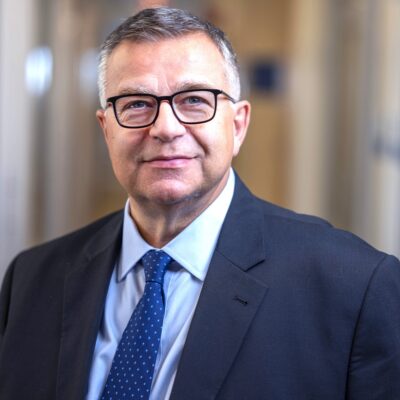
Dr. Rocco received his medical degree from the University of Milan in Italy. After general and thoracic surgery residencies at the University of Milan, Dr. Rocco completed a visiting residency and clinical fellowship in advanced general thoracic surgery at the Mayo Clinic. Dr. Rocco has served on the thoracic surgical faculty of E. Morelli Regional Hospital, in Sondalo, Italy, and as a Consultant and Senior Clinical Lecturer at the Sheffield Teaching Hospitals of the University of Sheffield, England. Dr. Rocco then served as the Chief of Thoracic Surgery and Chair of the Department of Thoracic Surgery and Oncology at the National Cancer Institute of Naples, Italy. In 2018, Dr. Rocco joined the faculty at Memorial Sloan Kettering as an Attending in the Thoracic Service, Department of Surgery, and as a Full Professor of Cardiothoracic Surgery at Weill Cornell Medical College in New York.
Dr. Rocco is a past President of the European Society of Thoracic Surgeons and served as Editor, Director of Education, co-founder of the ESTS Thoracic School and Treasurer of the same organization. Dr. Rocco has been an Associate Editor of the European Journal of Cardio-Thoracic Surgery as well as an Associate Editor of the Journal of Thoracic and Cardiovascular Surgery; currently, he is a co-Editor of Shields' General Thoracic Surgery textbook. His visiting professorships include several international institutions in the US, Europe and Asia.
Dr. Rocco's research currently focuses on new technologies for the early detection of lung cancer, championing the use of electronic nose technology for the early detection of lung cancer and the assessment of response to treatment, for which he was awarded an R21 grant by the National Institutes of Health in 2024. He has authored or co-authored over 400 peer-reviewed articles, wrote several textbook chapters, played a lead role in 20-plus clinical trials, and given more than 300 invited lectures around the world.
What Does The AATS Mean To You:
For a surgeon of my generation, becoming an AATS member was always considered one of the highest career achievements. AATS is the North Star in the firmament of our specialty, committed as it is to academic and clinical excellence, which are to be pursued according to the triad of values (vision, leadership, and scholarship). I have always recognized myself in these values.
My First Experience with AATS:
My first experience with AATS was at the 72nd Annual AATS Meeting, in Los Angeles, in 1992. I remember Dr. John Waldhausen's address about the history of AATS and its role in developing our specialty, which was thriving due to the contributions of the legendary names populating the pages of the Journal of Thoracic and Cardiovascular Surgery. Those legendary names had faces I could meet and hands I could shake, after my timid introduction. As a young apprentice from Europe, I had the chance to sit at the gala dinner table with giants like Thomas Shields, Harold Stern, and James Mark, fascinated by the conversation and engaged in memorizing those unforgettable moments.
Why I became an AATS member:
I owe it to Toni Lerut, who proposed the idea that I was a suitable candidate to be elected to membership and who later became my primary sponsor. At that time, I thought that the AATS headquarters were built on Mount Olympus, where only a few mortals could be admitted every once in a while.
The most impactful presentation I have seen at an AATS meeting:
There are too many. However, for the number of papers and the discussion generated, I would cite Gail Darling's presentation of "Randomized trial of mediastinal lymph node sampling versus complete lymphadenectomy during pulmonary resection in the patient with N0 or N1 (less than hilar) non-small cell carcinoma: results of the American College of Surgery Oncology Group Z0030 Trial," which was presented at the 90th Annual Meeting, in Toronto, in 2010.
The first presentation I gave is:
"Results of reoperation on the upper esophageal sphincter." The coauthors of this paper were Claude Deschamps, Elyse Martel, Andre Duranceau, Victor F. Trastek, Mark S. Allen, Daniel L. Miller, and Peter C. Pairolero. It was presented at the 78th Annual Meeting, in Boston, in 1998.
The first paper I had published is:
Rocco G, Robustellini M, Rossi G, Della Pona C, Rizzi A, Crasti B. Solitary bone plasmacytoma of rib presenting as a superior sulcus tumor. J Thorac Cardiovasc Surg. 1993;105(5):944-945.
I plan on becoming more involved in the organization through:
As it is deemed appropriate by the AATS leadership, I am ready to share the experience and expertise I have developed through the years.
My First Experience with AATS:
My first experience with AATS was at the 72nd Annual AATS Meeting, in Los Angeles, in 1992. I remember Dr. John Waldhausen's address about the history of AATS and its role in developing our specialty, which was thriving due to the contributions of the legendary names populating the pages of the Journal of Thoracic and Cardiovascular Surgery. Those legendary names had faces I could meet and hands I could shake, after my timid introduction. As a young apprentice from Europe, I had the chance to sit at the gala dinner table with giants like Thomas Shields, Harold Stern, and James Mark, fascinated by the conversation and engaged in memorizing those unforgettable moments."
My career in CT Surgery was inspired by:
The seed was probably planted by the black-and-white television transmission of the news about the first heart transplant, by Christiaan Barnard, in 1967. Upon finishing medical school at the University of Milan, I started an internship in the Cardiothoracic Department, where one of the units was chaired by Giorgio Vincre, MD, who was a cardiac surgeon dedicating a significant part of his practice to general thoracic surgery. I spent eight years there before starting my first job in thoracic surgery.
A significant case/patient interaction that impacted my career is:
The case of a middle-aged gentleman with a giant recurring chondrosarcoma. He taught me that, after resection, one should also be proficient in reconstruction.
The biggest impact my mentor had on my career is:
My mentor taught me the basic rules of patient selection, intraoperative management, and postoperative care, which are specific to our specialty and have been reinforced with the technological advancements I have had available to me through the years.
The topic most important to advancing the field of CT Surgery is:
A vision supported by stamina, relentless determination, and a thorough knowledge of the past and present literature.
The most pressing issues impacting CT surgery are:
Access to care, requalification of training, and financial toxicity.
Advice for Trainees:
Consider every step in your career a starting point and not a final achievement.